Get FREE lab diamond jewellery on purchases over £1,000. Claim yours at checkout.

Your sign to save more, get an extra 20% off with code 'EXTRA20'.

Engagement Ring Guide


book svg

If you want to know more about diamonds, you have come to the right place! Here, we will educate you on types of engagement rings, different diamond settings, and the significance, sentiment and symbolism behind wearing an engagement ring.

The Importance and History of an Engagement Ring

Engagement rings hold cultural, personal, and emotional significance for many people. They are seen as a symbol of commitment and love, representing a promise of marriage and commitment to a lifelong partner. An engagement ring represents love, dedication, and an intention to spend the rest of your lives together. 

The tradition of proposing with engagement rings dates back centuries. Usually, the formal announcement of an engagement between two individuals was done during the exchanging ceremony of these engagement rings. Engagement rings publicly declares the commitment between two people.

Engagement rings also hold very sentimental value to many people- they represent pivotal, milestone moments for couples and serve as constant reminders of the journey they are about to embark on.

Engagement Ring Anatomy

Understanding the anatomy of an engagement ring is important for many reasons. It can facilitate a more informed purchasing decision, help you communicate with jewelers better and be more confident and vocal about your preferences. To better understand the main components of an engagement ring, we have provided you with a basic anatomy of an engagement ring with descriptions.

Head: The head of a ring is responsible for holding the centerstone. This section includes the setting and prongs that secure the diamond, or gemstone, in place.

Prongs: Prongs are the small claws that extend from the head to the centerstone, where they wrap around the table. This ensures that the centerstone is set securely and doesn’t fall. Prong types and prong numbers can vary based on the centerstone and the customer’s preference. To note: prongs are not the only setting type available in engagement rings, one may choose to opt for a bezel setting, channel setting, flush setting, amongst other options.
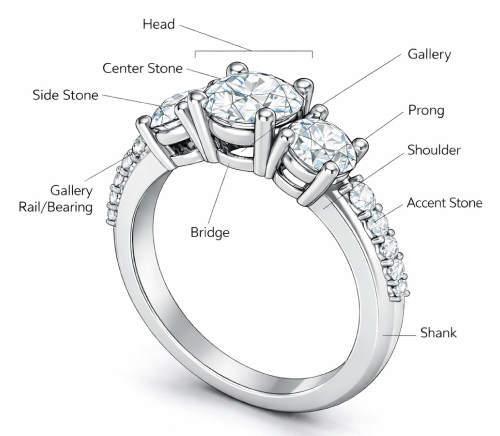
Shank: The shank refers to the circular band that surrounds the finger. A ring’s shank can vary in its width, thickness, design,or texture and can be personalized with elements such as engravings and custom design-work. 

Shoulder: The shoulder is the part of the shank that rises up towards the head. It helps in providing support to the head. To make it more unique, the shoulder can sometimes have accent stones or intricate designs. 

Gallery: The area beneath the centerstone is referred to as the gallery, between the head and the shank. It can be personalized with intricate designs, side stones, to add to the rings aesthetics. 

Centerstone: The primary stone (typically a diamond) in a ring. 

Understanding these components allows you to appreciate the craftsmanship involved in creating an engagement ring and aids in making informed choices about design, style, and quality.

Engagement Ring Types

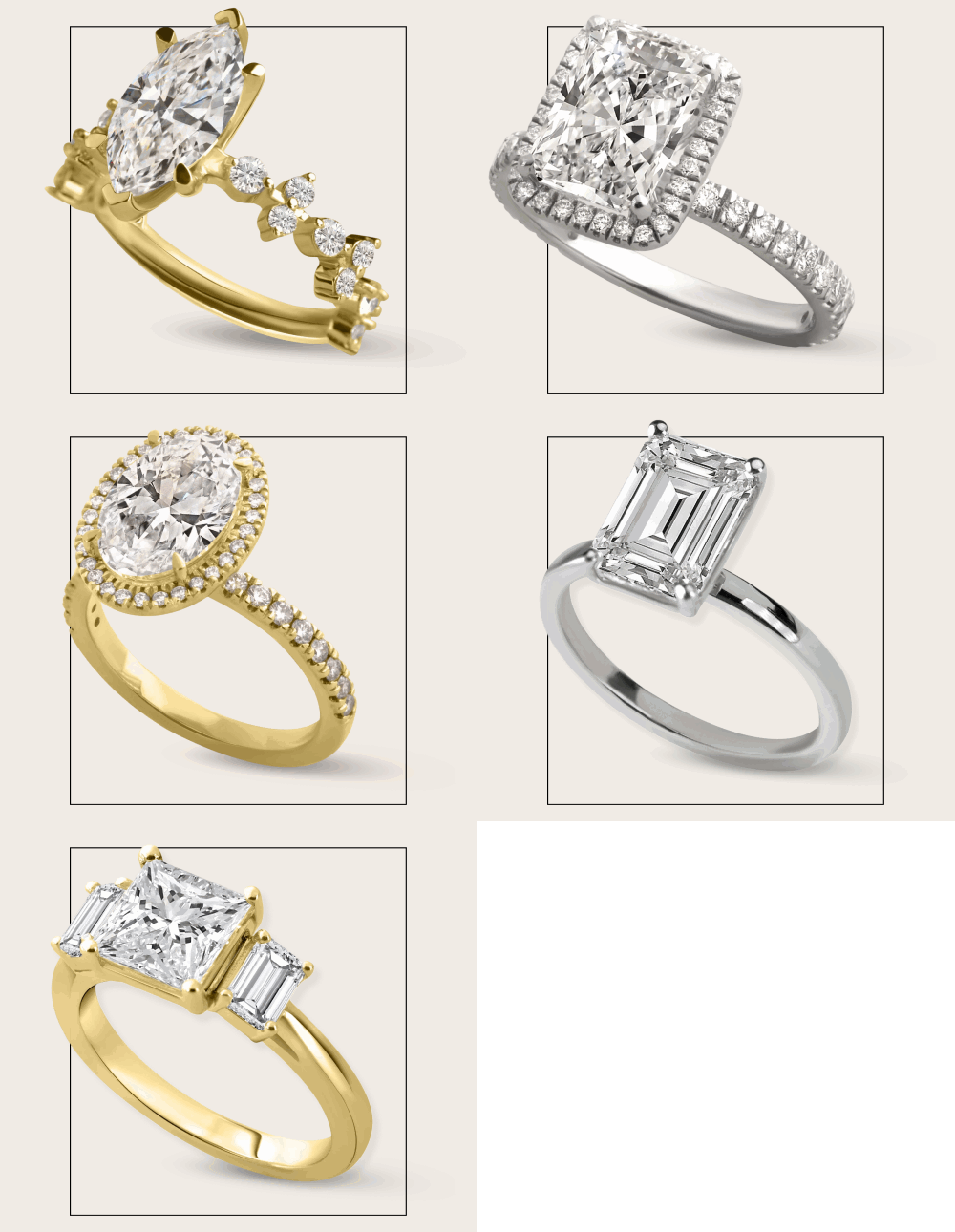
There are a number of different engagement ring styles- ranging from minimal solitaire rings to intricate vintage rings. The following table offers insight into some of the most popular ring styles.

Category

Image

Description

Three Stone

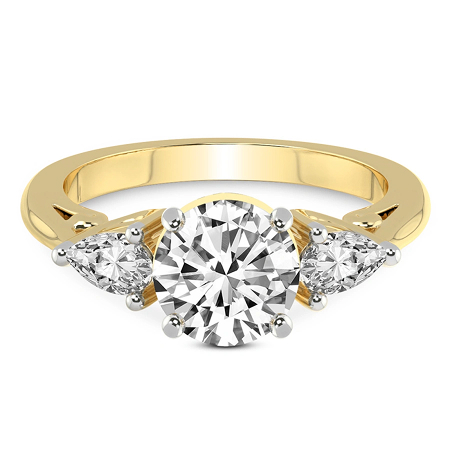
Also known as a trilogy ring, this category of engagement rings features a central diamond with two smaller side stones. This elegant design holds deep symbolism and is cherished for its meaningful representation and aesthetic appeal.

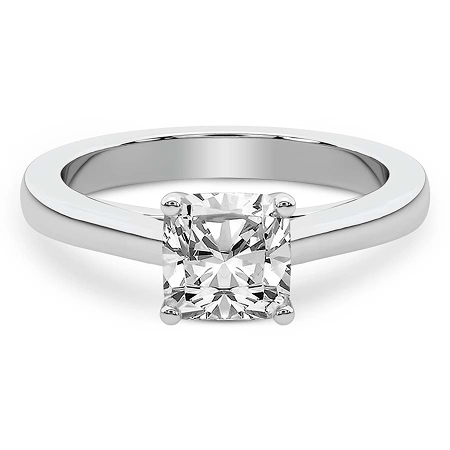
Solitaire

Solitaires are often considered to be the most classic and sophisticated engagement ring style. It features a singular diamond and is a popular choice for people opting for a more evergreen, simple ring. A solitaire can be personalized with engravings.

Side Stone

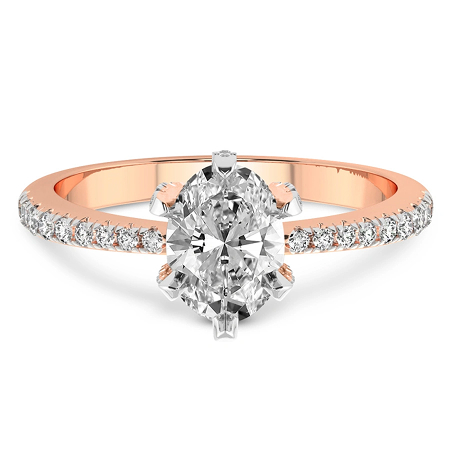
The sidestone ring is similar to a 3-stone ring, but the side diamonds are usually significantly smaller than the centerstone. Sidestone rings emphasize the centerstone diamond more, and make the ring look fuller and bigger.

Halo

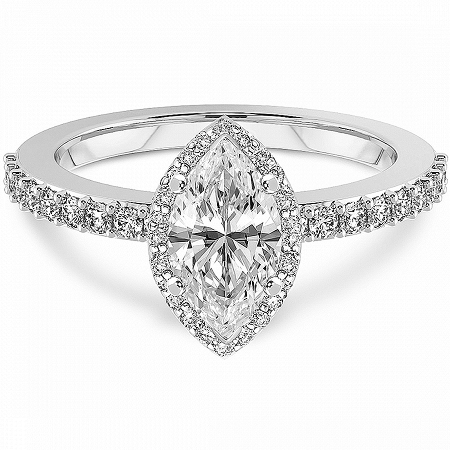
The halo setting is a popular choice. It features a central gemstone encircled by a ring of smaller accent stones, creating a stunning halo effect to enhance the brilliance and size appearance of the main stone.

Vintage

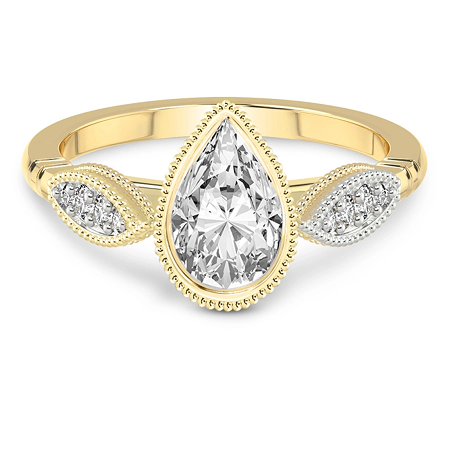
Characterized by intricate details and designs inspired by styles from past eras, such as Art Deco, Edwardian, or Victorian periods. These rings often feature filigree work, milgrain edges, and unique settings. Individuals generally opt for this style for its distinctive charm and its vintage appeal.

Engagement Ring Settings

The beauty of an engagement ring is there are numerous ways to make it unique. You can choose to go for a different style, or you can choose to set the diamonds or gemstones differently. A ring’s setting is important in order to keep the diamond or gemstone intact and secure. The type of setting used can add beauty and personality to your ring. Here are a couple different ring settings.

Engagement ring settings can be broken down into two further categories: 

  1. Side stone settings

  2. Centerstone settings

Sometimes, the setting of the sidestones and the centerstones will be the same, and sometimes customers may opt for different settings for the diamonds.


Side Stone Setting

Setting

Description

Prong

Individual prongs hold each side stone in place, maximizing light exposure to enhance sparkle.

Pavé

Diamonds are set closely together with minimal metal showing, creating a continuous sparkling effect.

Microsetting

A more delicate version of pavé, where very small stones are meticulously set with tiny prongs for a fine, detailed look.

Split

The band splits into two or more strands before meeting at the main stone, often decorated with side stones for added elegance.

Bezel

The side stones are encircled by a thin metal rim, offering excellent protection while creating a modern, sleek look.

Shared Prong

Side stones share prongs with adjacent stones, reducing the amount of metal visible and allowing for maximum light exposure.

Flush (Gypsy)

Stones are set directly into the band so that the top of the stone is flush with the metal, offering a smooth, modern look and excellent protection.

Channel

Stones are set between two parallel metal walls, creating a sleek, uninterrupted line of stones with good protection from knocks and bumps.

Scallops

Similar to pavé, but with small, scalloped edges that hold the stones in place, offering a delicate, lacy appearance with added brilliance.

Centerstone Setting

Setting

Description

Basket

A setting where prongs are connected by horizontal bands, forming a "basket" that securely holds the centerstone. This setting also allows light to enter freely, exuding brilliance.

Peg Head

The diamond is mounted on a peg, which is then soldered to the ring shank, creating a classic and high-prong appearance.

Bezel

The centerstone is securely encircled by a continuous metal rim, offering a modern look and providing excellent protection for the stone.

Half Bezel

Similar to a bezel setting, but the metal rim only partially surrounds the diamond, around 50%, allowing for more light to enter the diamond while still providing secure protection.

Trellis

An interwoven design where the prongs overlap, offering a unique, elegant look that complements the diamonds.

Illusion

A diamond setting that uses metas that are textured or reflectivel around the diamond to make it looklarger and sparkle more brilliantly.

Bridge Accent

Features additional stones or intricate metalwork on the bridge (the area under the center stone) for added detail and elegance.

Decorative (Twisted)

A setting with artistic or intricate metalwork, some examples may be a twisted or braided design, adding a unique and personalized touch to the ring.

Bar

The center diamond is secured by two vertical bars on opposite sides, creating a modern and open look.

Channel

The diamond is set between two parallel metal walls. This setting is very secure and popula, often used for side stones but can also be adapted for the center stone for a sleek, protected look.


What are Shanks?

A shank refers to the part of the ring that forms the band that wraps around the finger. It can be considered to be the ‘body’ of the ring and can be completely customized based on the style, shape, design, or engravings added.

Types of Shanks:
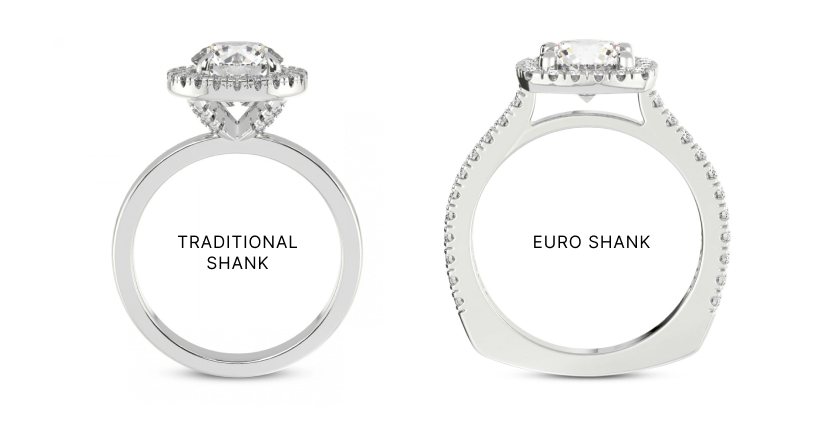
  1. Shape: The shape of a shank can significantly impact its overall appearance. Two of the most popular shank types are:

    a. Traditional Shank: this is the most common shank type. It is a smooth, rounded (or slightly squared) band that wraps around the finger. This shank is usually symmetrical and classic.

b. Euro Shank (aka European Shank): The Euro shank is like the traditional shank with a flat bottom. This design helps prevent the ring from spinning on the finger and adds a subtle, more modern touch to the ring’s appearance.

2. Design/Setting: A shank can be completely customized based on its overall design and diamond setting. Diamonds can be set in a variety of ways on a shank, and each one provides a different look.

a. Solid Shank: For those who opt for a simple metal band without any diamonds or gemstones. It offers a simple, classic, durable design.

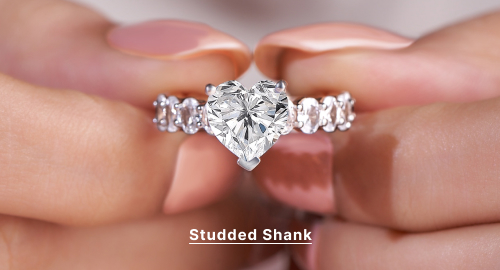
b. Full Studded: A fully studded shank is one with diamonds or gemstones set all along the entire circumference of the band, creating a continuous line of sparkle. This type of band is also sometimes referred to as an ‘eternity’ band.

c. 50% Studded: Diamonds or gemstones that are set on only half of the band, typically on the top portion that is visible. The bottom side of the shank usually remains as just a simple metal band.

d. Partially Studded: Similar to a 50% studded, but the gemstones or diamonds cover more or less than half of the band.

e. Tapered Shank: Tapered shanks have bands that gradually get narrower or wider, usually near the gemstones or diamond setting. This can help emphasize the centerstone or create a more comfortable fit. 

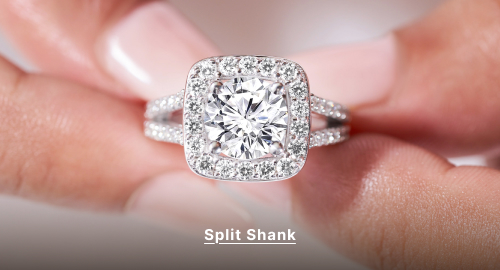
f. Split Shank: A popular choice to make the centerstone stand out more. In this setting, the band splits into two or more strands before meeting at the centerstone.

Shanks play a crucial role in the overall look, feel, and comfort of a ring, and they can significantly influence the ring's style and wearability.

Ring Sizing

Ring sizing refers to the process of adjusting a ring to fit a particular finger size comfortably, while ensuring it is securely intact. Ring sizing is incredibly important, and can be done at home. 

How to Measure Your Ring Size

Measuring your ring size is the first step towards buying your dream ring! It can be done in a few simple steps- either at home or with the help of a jeweler. Here are a couple of ways you can measure your ring size: 

  1. Using a Ring Sizer (Most Popular Method) 

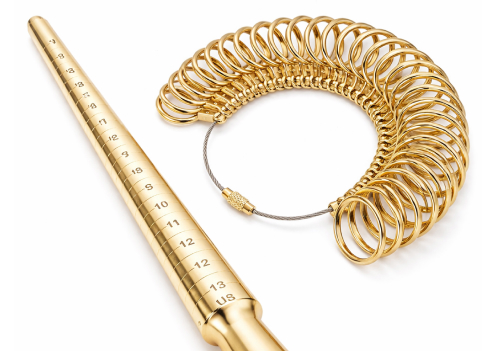
    a. A ring sizer tool consists of a series of rings in various sizes. Try on the rings until you find the one that fits securely and comfortably on your finger. 

    b. A ring mandrel is a tool, tapered rod marked with ring sizes on it. You can use this to slide your ring onto the mandrel to determine its size. 

2. Measuring with a Strip of Paper

Steps: 

a. Cut a strip of paper (about 6 inches long) 

b. Wrap the strip around the based of your finger where the ring would sit 

c. Mark the overlap

d. Measure length after marking the overlap but laying the strip flat on a surface and measure in millimeters (mm)

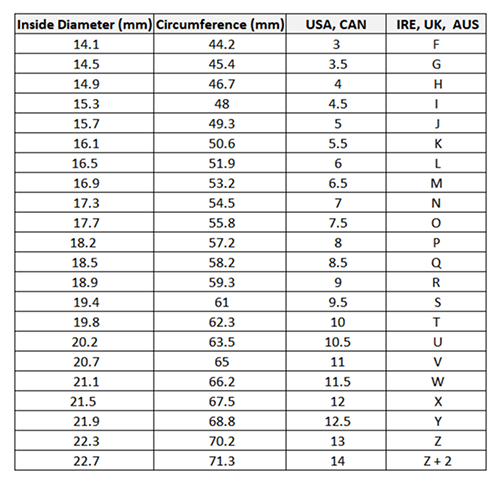
e. Use the measurements to determine your ring size using a conversion chart (can be seen below)

3. Using an Existing Ring

  1. Choose a ring that fits your intended finger comfortably, use a ruler to measure the inside diameter of the ring in millimeters, and refer to a conversion chart to find the corresponding size. 

Ring Size Conversion

Different countries use different systems to measure the ring size. This is why a conversion chart is important.

Additional Tips for Accurate Ring Size Measurements
  1. Measure at the end of the day: Fingers tend to swell throughout the day, so measure your finger at the largest (which is usually in the evening)

  2. Temperature impacts size: Cold fingers will shrink slightly, so ensure you measure your ring size when your hands are warm and at room temperature. It is important to note that in hot weather, your fingers might swell up a bit also. 

With these methods and the conversion chart, you can accurately determine your ring size or convert it to different sizing systems used worldwide.


Metals

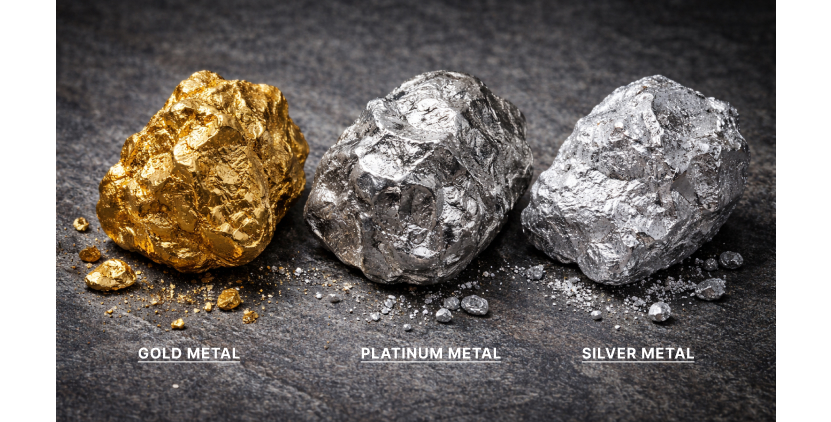
Jewelry can be made in a range of metals- gold, silver, platinum, nickel, and more.. Every metal has its own beauty and uniqueness. Diamonds are most commonly set in gold due to its beauty and workability. 

Types of Metals

Gold

Gold is a precious metal known for its lustrous yellow appearance, malleability and resistance to tarnish and corrosion. It has been used for centuries in jewelry due to its beauty and workability. Gold is an incredibly versatile metal to use in jewelry- it can differ in karats and in color. The purest gold is 24 karats (24kt). It is, however, alloyed with other metals to increase its strength, durability, or add color  The alloy added to the gold, and the amount of alloy added, determines the overall color of the metal. 

Platinum

Platinum is a rare, exquisite, naturally white metal that is incredibly durable, dense and resistant to tarnish. It is often used in fine jewelry, and is valued for its purity. Platinum jewelry is usually 90-95% pure, with small amounts of alloy metals such as iridium or ruthenium. 

Palladium

A member of the platinum family, as it shares many of its qualities- it is naturally white color, durable, and resistant to tarnish. It is lighter and more affordable than platinum. It is an incredibly high-purity metal with 95% palladium.

Silver

Silver has been very commonly used in jewelry for centuries. It is softer than gold and platinum, which makes it more prone to scratching. It iis often alloyed to improve its durability.

Gold Purity

The unit of measuring gold purity is Karats (kt),. Pure gold is 24kt, meaning it contains no other metals. Lower karat numbers indicate that the gold has been alloyed with other metals to improve its hardness, durability, and make it more affordable. The most common gold karats include 10kt, 14kt, 18kt, 22kt, and 24kt.

Metal Color

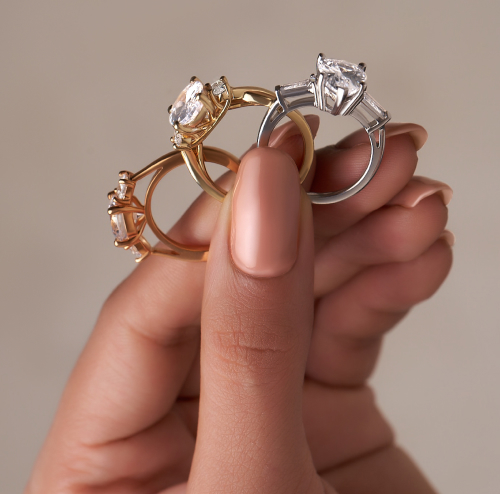
Yellow Gold: This gold color is considered to be traditional and classic- yellow gold is the natural color of gold. It is usually alloyed with metals such as copper and silver to increase its strength while maintaining its warm, golden hue. 

White Gold: White gold is an alloy of gold and white metals such as nickel, silver, or palladium. These metals give the gold a more silvery-white appearance. In order to enhance its whiteness, white gold is often plated with rhodium. 

Rose Gold: Rose gold, also referred to as pink/red gold, has a rosy hue and warm undertone. Rose gold is created by alloying gold with metals such as copper. The higher the copper content is, the redder the gold will appear.